Tender documents in the construction industry are becoming increasingly comprehensive. Large projects can come with project descriptions and requirement specifications spanning hundreds of pages, which companies must familiarise themselves with in a short period of time.
For many small and medium-sized enterprises, this is a real challenge.
Because how do you navigate efficiently through enormous amounts of documentation while simultaneously managing projects and keeping daily business running?
The complexity particularly affects smaller businesses
Many companies in the construction industry today are left with the feeling of having to process huge amounts of information in a very short time.
Particularly for companies with 10-20 employees, limited administrative resources, and many concurrent projects, it can be difficult to review and understand large tender documents in detail.
The risk is also high. If something is overlooked in a bid or project material, it can have major consequences later in the project.
AI can help decode the complexity
This is where AI is beginning to open up some interesting opportunities. Not necessarily as a replacement for professional expertise, but as a helper that lends companies a hand in navigating vast amounts of information.
For example, it can help with:
understanding requirements in tender documents
finding relevant descriptions faster
identifying potential risks
or looking up specific requirements directly on the construction site
Instead of manually searching through 100 pages of project material, one can imagine that employees can instead ask directly about specific requirements and get quick answers back.
From the bidding phase to operations
The potential does not stop at the bidding phase. A major challenge in the construction industry is often that important information becomes difficult to find again once the project is underway. This means that employees operational on-site must spend time searching for requirements and descriptions in the middle of a busy workday. Here, AI can potentially function as an active reference tool directly within the project.
This can make it easier to:
get the work right the first time
reduce misunderstandings
and ensure that requirements from the project material are followed in practice
AI does not change the need for professional expertise
Although the possibilities are great, AI does not change the need for experience and technical understanding in the construction industry.
The technology only becomes valuable when it supports the people who already possess the practical and technical knowledge.
Therefore, this development is perhaps less about automation and more about making complex information easier to work with in practice.
Listen to Quality Club about AI in the construction industry
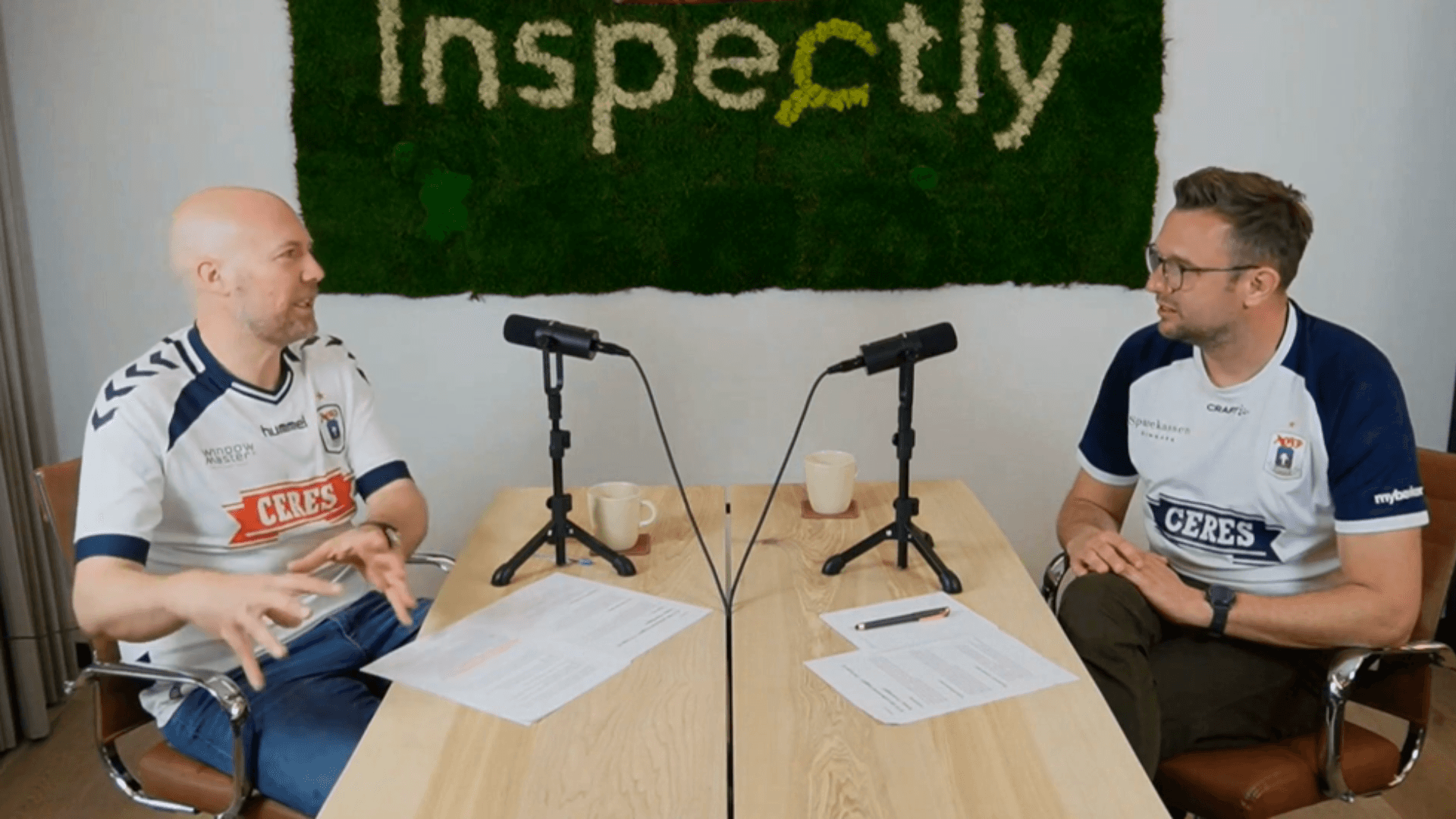
In Quality Club episode 21, Torben and Jesper dive into how AI can be used very concretely in the construction industry – not as future talk, but as practical tools in everyday life. Among other things, they talk about how AI can help navigate large amounts of documentation, identify patterns in projects, support quality assurance, and make complex inspection plans easier to work with. At the same time, they discuss how the construction industry already sits on huge amounts of data, which could become the foundation for smarter and more proactive workflows in the future.
👉 Listen to the episode: https://open.spotify.com/episode/7naZbumq0KHgtzSTZ8Fw9o?si=iTdn-o97Tg2TbuHHOTnOLw


